 Pin It
 There's something about December that makes me crave the smell of molasses and spice filling the kitchen, and gingerbread cookies are how that ritual always starts. I learned to make these from my grandmother, who'd roll them out while humming old songs, and watching her hands work the dough with such ease made it look effortless. Now when I bake a batch, I understand what she knew—that good gingerbread is less about precision and more about patience, especially that hour of waiting for the dough to chill. The soft centers and gentle crunch at the edges are the reward for not rushing, and the icing that comes after is just the joy of decorating.
I remember my friend Emma coming over the first year I made these, skeptical that homemade cookies could possibly compete with bakery versions. She stayed for three hours, covered in flour and icing, cutting shapes and laughing when one turned into a lopsided gingerbread blob. By the time we boxed them up, she'd already claimed half for herself, and now she makes a batch every season just so she can text me photos of her creations.
Ingredients
- All-purpose flour (3 cups): The foundation of structure; make sure it's measured by spooning into the cup rather than scooping, or you'll end up with a dense, heavy dough.
- Baking soda and baking powder (3/4 teaspoon and 1/2 teaspoon): Together they give the cookies their tender crumb and subtle lift without making them cake-like.
- Ground ginger (1 tablespoon): This is where the character lives—fresh ground tastes worlds brighter than pre-ground, so grind it yourself if you can.
- Cinnamon, cloves, and nutmeg: Each one contributes warmth without overpowering; this balance is what separates good gingerbread from gingerbread that tastes like a medicine cabinet.
- Unsalted butter (3/4 cup, softened): Let it sit on the counter until it yields to a gentle poke, or the sugar won't cream properly and your cookies will be tough.
- Dark brown sugar (3/4 cup packed): Press it into the measuring cup so you get the right weight and that deep molasses undertone.
- Egg and molasses: The egg binds everything together, while molasses provides color, moisture, and that classic gingerbread flavor—unsulphured molasses is gentler and less overpowering than blackstrap.
- Vanilla extract: A teaspoon rounds out the spices with subtle sweetness and depth.
- Granulated sugar for rolling: Optional, but it catches light when the cookies bake and adds a delicate sparkle.
Tired of Takeout? 🥡
Get 10 meals you can make faster than delivery arrives. Seriously.
One email. No spam. Unsubscribe anytime.
Instructions
- Mix your dry ingredients first:
- Whisk together the flour, baking soda, baking powder, ginger, cinnamon, cloves, nutmeg, and salt in a medium bowl. This ensures the leavening and spices are evenly distributed so every bite tastes the same.
- Cream butter and brown sugar:
- Beat them together in a large bowl for about 2 minutes until the mixture looks light and fluffy, almost like soft cloud. This aerates the dough and sets you up for tender cookies.
- Add your wet ingredients:
- Drop in the egg, molasses, and vanilla, then beat until everything is well combined and the mixture looks dark and rich. Take a moment here to smell it—that's your cue that the spices are waking up.
- Bring it together gently:
- Gradually add the dry ingredients to the wet mixture, stirring just until no flour streaks remain. Overmixing toughens the cookies, so stop as soon as you can't see the dry bits anymore.
- Chill the dough:
- Divide the dough into two discs, wrap them tightly in plastic wrap, and refrigerate for at least 1 hour, or until the dough is firm enough to roll without sticking. This wait is not negotiable—it's what gives you cookies that hold their shape instead of spreading into puddles.
- Roll and cut:
- Preheat your oven to 350°F and line baking sheets with parchment paper. On a lightly floured surface, roll one disc of dough to 1/4-inch thickness, then cut into shapes with cookie cutters. The dough should be cool enough to handle but not so cold that it shatters.
- Space and optional sprinkle:
- Arrange cookies about 1 inch apart on your prepared baking sheets. If you want that sparkly finish, sprinkle with granulated sugar now before they go into the oven.
- Bake with attention:
- Bake for 8 to 10 minutes, watching until the edges just begin to look set but the centers still feel slightly soft to the touch. They'll firm up as they cool, so don't overbake or they'll turn crunchy.
- Cool in stages:
- Let cookies cool on the baking sheet for 2 minutes to set, then transfer them to a wire rack to cool completely. This two-stage cooling prevents them from being too fragile to move.
- Decorate with care:
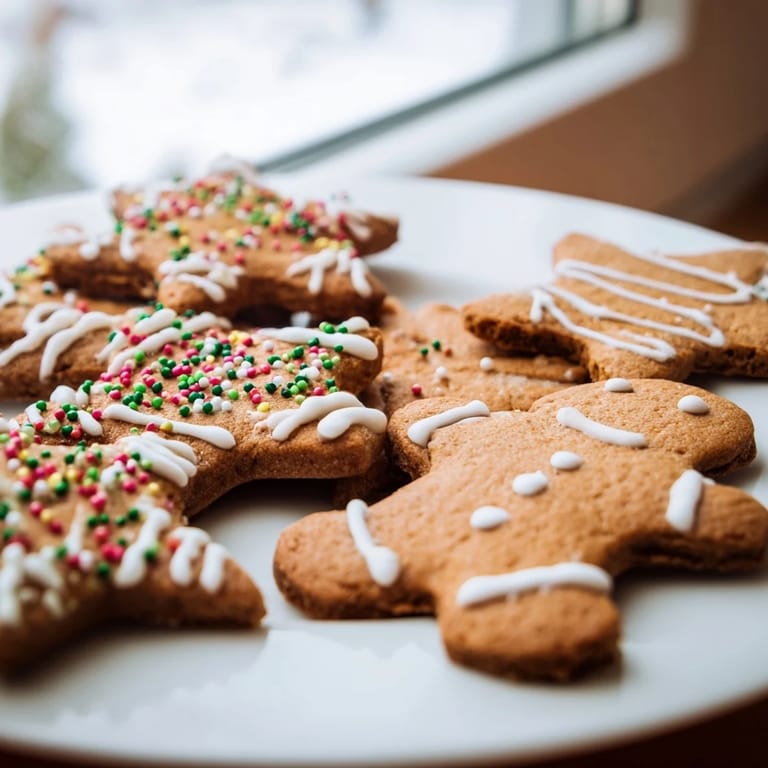
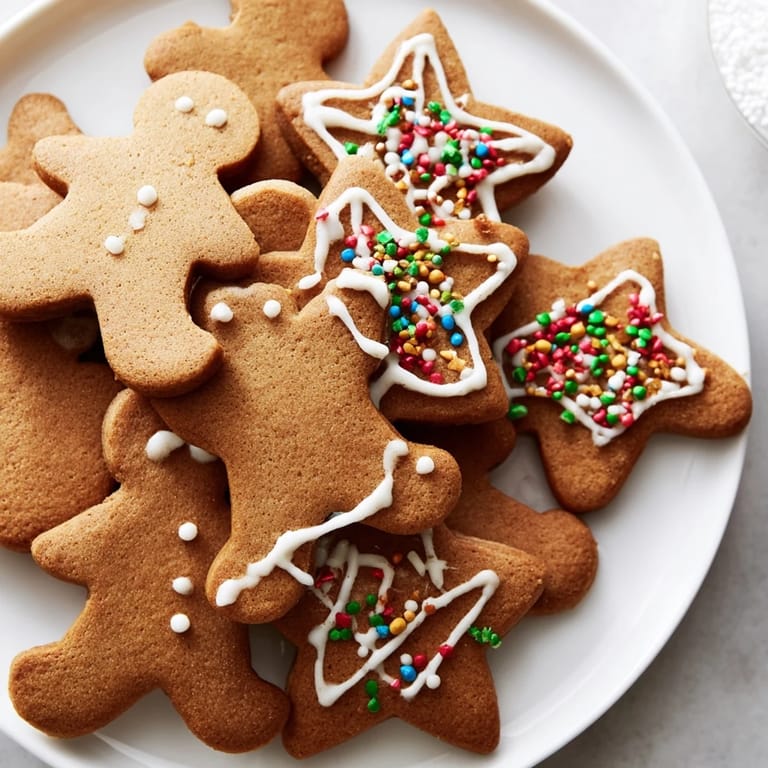
- Once completely cooled, apply royal icing with a piping bag or a small brush, then add sprinkles or other decorations while the icing is still wet. Let the icing dry before stacking or packaging.
 Pin It
 Years ago, I brought a box of these to my coworker Diane who'd mentioned missing her mother's holiday baking after she passed away. Watching her face soften as she bit into one, then ask for the recipe—that's when I understood these aren't just cookies, they're edible permission to slow down and remember the people we love. Now I make them partly for the eating and partly for that quiet, connective feeling they bring.
Why Gingerbread Stays on the Table
Gingerbread cookies sit in a rare category—they're ambitious enough to impress, simple enough not to intimidate, and nostalgic without being boring. The molasses gives them an earthy anchor that keeps them from tasting like dessert overload, and the spices are warm without being harsh. They're good next to coffee on a Tuesday morning or stacked high on a holiday platter, which means you can justify making them anytime, not just December.
Storing and Gifting Strategy
I learned the hard way that gingerbread cookies love airtight containers—they actually stay soft and chewy longer than in open air, which feels backwards but is completely true. Room temperature storage works fine for up to a week, and I've had them last three weeks tucked into a sealed box without going stale. If you're giving them as gifts, stack them between parchment squares in a pretty tin with the understanding that the recipient will probably eat half before getting home.
Making Them Your Own
The beauty of this recipe is how it accepts variation without losing its soul. I've added a teaspoon of cardamom when I'm feeling adventurous, swapped in coconut sugar for the brown sugar, and once used a combination of honey and molasses when I was out of the full amount. The spice ratio is flexible enough that you can lean heavier on ginger if you want more heat, or dial it back if you prefer subtlety. Every adjustment still tastes like home, which is really the whole point.
- For extra moisture, add an extra tablespoon of molasses and reduce the flour by 2 tablespoons.
- Brush warm cookies with a butter-honey glaze instead of icing for a less sweet, more sophisticated finish.
- Keep leftover dough in the freezer in a labeled bag and pull it out whenever you need an instant weekend project.
 Pin It
 These cookies are proof that the most meaningful food is often the simplest—just butter, molasses, and spice turned into something that makes people smile. Bake them for yourself, bake them for others, or bake them just because your kitchen deserves to smell like December.
Recipe FAQs
- → What spices are used in these cookies?
The blend includes ground ginger, cinnamon, cloves, and nutmeg for a warm, festive flavor.
- → How long should the dough be chilled?
Chilling the dough for at least 1 hour firms it up, making it easier to roll and cut.
- → Can these cookies be decorated?
Yes, they're ideal for decorating with royal icing and colored sprinkles once cooled.
- → What affects the cookie texture?
Baking time influences texture; shorter baking yields softer cookies, longer baking makes them crisper.
- → Are there any common substitutions suggested?
Blackstrap molasses should be avoided as it is too bitter; plant-based butters can replace dairy for a dairy-free option.
- → How can I store the dough or finished cookies?
The dough can be refrigerated for up to 3 days or frozen for 2 months; baked cookies keep well stored airtight.