 Pin It
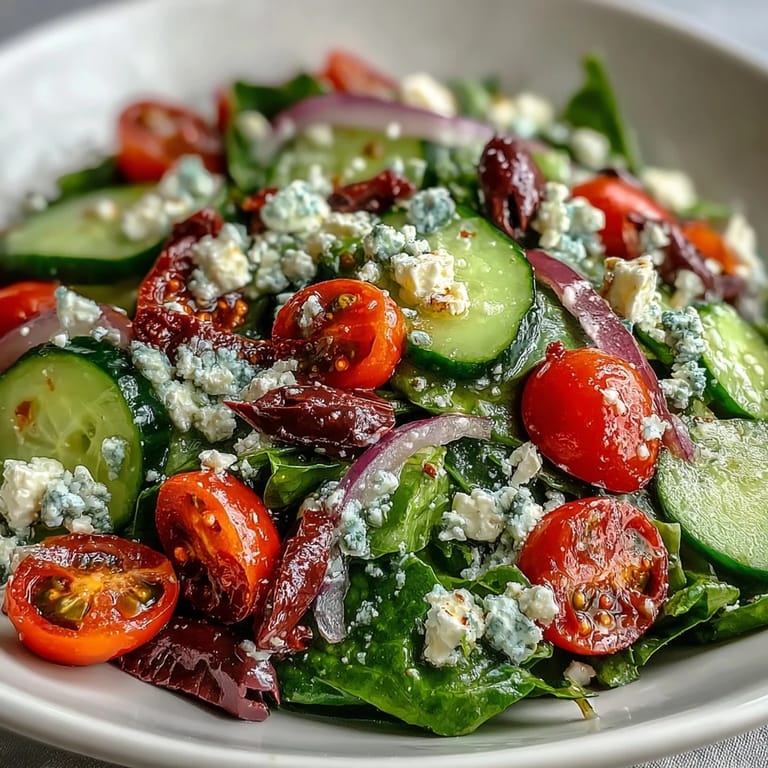
 My neighbor Maria handed me a bowl of this salad one summer afternoon, and I immediately understood why she made it three times a week. The greens were impossibly crisp, the tomatoes burst with sweetness, and that dressing—tangy, garlicky, alive—made everything sing together. I asked for her recipe right then, standing in her kitchen with the bowl still in my hands, and she laughed because it was so simple she'd never written it down. Now it's become my go-to when I want something that tastes like the Mediterranean without fussing for hours.
I made this for a potluck once and watched people go back for thirds, piling their plates high when they thought nobody was looking. That's when I realized a good salad doesn't have to apologize for being simple—it just has to be honest and fresh. The feta, those Kalamata olives, the snap of raw vegetables—they don't need fancy techniques, just quality ingredients and a moment of attention.
Ingredients
- Spring mix: Choose a mix with baby lettuces, arugula, and spinach for complexity—bland iceberg won't cut it here, and the delicate leaves stay crisp longer if you keep them cold until the last minute.
- Cherry tomatoes: Halving them releases their juices slightly, creating little pools of flavor without making the salad soggy if you dress it right before eating.
- Cucumber: A crisp, firm one matters more than you'd think; slice it thin so it tastes fresh and cool rather than watery.
- Kalamata olives: Pit them yourself if you find unpitted ones—they're cheaper and somehow taste more authentic, though pitted versions save time.
- Red onion: Slicing it thin makes it sharp but not overwhelming; it adds color and a little bite that wakes up the palate.
- Feta cheese: Real feta from Greece or the Balkans has tanginess that domestic versions sometimes lack—it's worth seeking out at a good market.
- Extra-virgin olive oil: This is where flavor lives, so don't reach for the cheap stuff; a fruity, peppery oil makes the whole salad better.
- Red wine vinegar: It's more forgiving than balsamic and lets the other flavors breathe instead of dominating.
- Dried oregano: The Mediterranean staple that ties everything to its roots; fresh is lovely too, but dried holds its flavor better in the dressing.
- Garlic clove: Minced fine so it diffuses evenly throughout the dressing without biting too hard.
- Dijon mustard: Just a touch acts as an emulsifier, keeping the oil and vinegar friends instead of enemies.
Tired of Takeout? 🥡
Get 10 meals you can make faster than delivery arrives. Seriously.
One email. No spam. Unsubscribe anytime.
Instructions
- Prep your vegetables with intention:
- Halve the cherry tomatoes and slice the cucumber, then lay everything out before you start assembling—there's something calming about seeing all your ingredients ready. Pat your spring mix dry if it's wet, because water is the enemy of a crisp salad.
- Build the salad foundation:
- Toss the spring mix, tomatoes, cucumber, olives, and red onion together in your largest bowl, using your hands or a gentle toss to combine without crushing anything. This is where you take a breath and admire how colorful it all is.
- Make the dressing sing:
- In a small bowl or jar, whisk the olive oil, red wine vinegar, oregano, minced garlic, and mustard together until it looks slightly creamy and emulsified—this takes just a minute of steady whisking. Season with salt and pepper, taste it straight from the spoon, and adjust to your preference.
- Dress with restraint:
- Drizzle the dressing over the salad just before serving, starting with less than you think you need, then toss gently to coat everything. You can always add more, but you can't take it back.
- Finish with feta and serve immediately:
- Scatter the crumbled feta over the top right as you're plating it—this keeps the cheese from getting lost and makes each bite feel a little luxurious. Serve right away while everything is still cool and crisp.
 Pin It
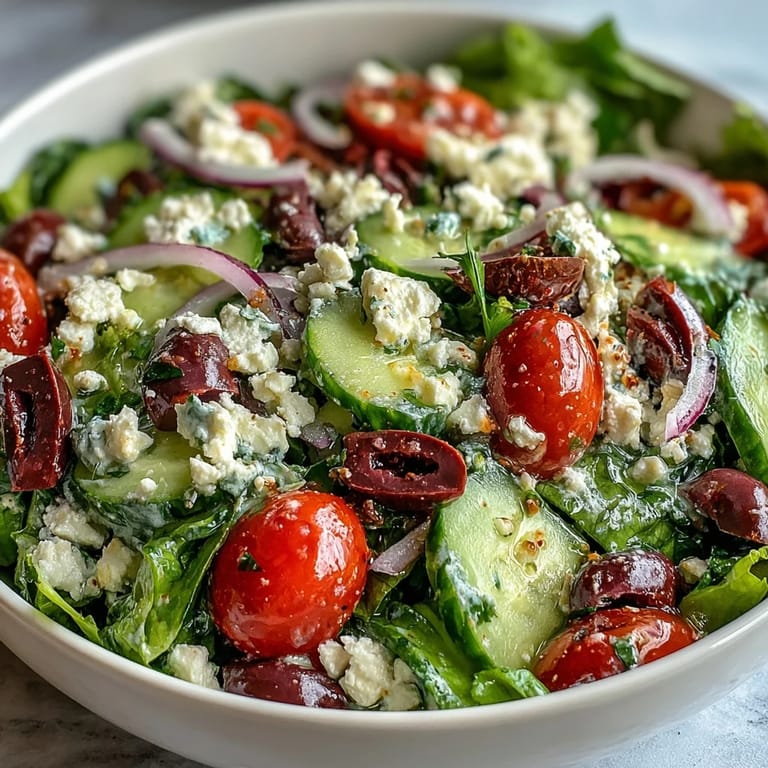
 There's a moment when someone takes their first bite, their eyes light up, and they say, "This tastes like a real place, like Greece or somewhere sunny." That's when I know the salad did its job—it transported someone, even if just for a lunch break. Food that simple and honest has a kind of quiet power.
Making It Your Own
This salad is a canvas, not a law. I've added grilled chicken when I needed something more substantial, scattered chickpeas for a vegetarian protein moment, and even tossed in shrimp when I was feeling fancy. One winter I added roasted beets and it was almost a different dish, but still felt true to itself. The core—good greens, ripe vegetables, briny olives, creamy feta, and that punchy dressing—stays constant while everything else shifts with the season and your mood.
The Dressing Ratio Secret
The dressing works because of the balance between the oil's richness and the vinegar's tang, with just enough garlic and oregano to hint at sun-warmed Mediterranean hillsides. Too much vinegar and you've made a sour salad; too little and it tastes flat and oily. The Dijon mustard is the quiet hero here—it's barely noticeable, but without it the dressing separates back into oil and vinegar layers instead of becoming one cohesive whole.
When Fresh Becomes Festival
This salad shines brightest when tomatoes are at their peak in late summer, when cucumbers are still tender, and when you can smell oregano from across the farmers market. But it's also forgiving enough to make year-round when good produce feels scarce—even in January, a bowl of this hits different than heavy winter food. The beauty is that simple ingredients give you nowhere to hide, so they reward you for choosing well.
- Toast some pine nuts or sunflower seeds and scatter them on top for extra crunch and richness.
- A handful of fresh herbs like dill or parsley adds brightness if you have them on hand.
- Serve it with warm pita bread or alongside grilled fish and vegetables for a complete meal.
 Pin It
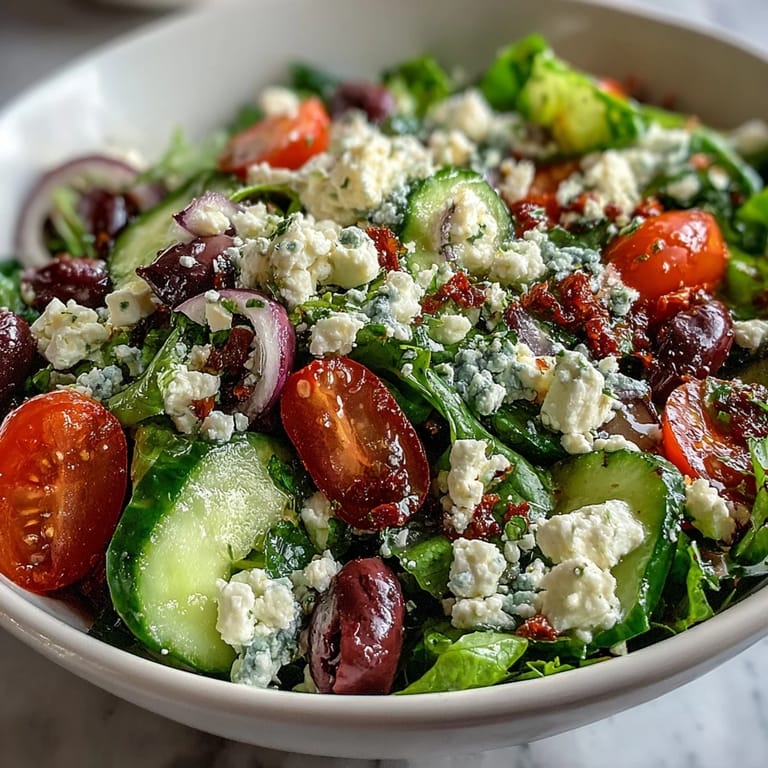
 This salad has become my answer to the question "What should I bring?" because it's always welcome, always eaten, and always makes people happy. In the end, that's what cooking is really about.
Recipe FAQs
- → Can I make this salad ahead of time?
Yes, you can prepare the vegetables and dressing separately up to a day in advance. Store chopped vegetables in an airtight container and keep the dressing in a sealed jar. Toss everything together just before serving to maintain crispness.
- → What can I substitute for feta cheese?
Try goat cheese, halloumi, or a dairy-free feta alternative. For a vegan option, use crumbled firm tofu seasoned with nutritional yeast or coconut feta.
- → How long does the Greek dressing stay fresh?
The dressing will keep in the refrigerator for up to one week when stored in a sealed container. Give it a good shake or whisk before using as ingredients may separate.
- → Can I add protein to make it a complete meal?
Absolutely. Grilled chicken, shrimp, salmon, or chickpeas work wonderfully. You can also add hard-boiled eggs or lentils for extra protein and substance.
- → What other vegetables work well in this salad?
Bell peppers, radishes, avocado, roasted red peppers, or artichoke hearts make great additions. Grilled zucchini and eggplant also complement the Mediterranean flavors beautifully.
- → Is this salad gluten-free?
Yes, all ingredients naturally contain no gluten. Just ensure your Dijon mustard and any other condiments are certified gluten-free if you have celiac disease or severe sensitivity.