 Pin It
 My grandmother's cast-iron skillet hung on her kitchen wall like a trophy, and I didn't understand why until the day she pulled cornbread from it that was somehow both crispy on the edges and impossibly tender inside. That golden dome rising out of the black iron felt like magic, but it was just technique and a little patience. Years later, I finally asked for her method, and what she shared was simpler than I expected yet somehow more satisfying. Now whenever I make this cornbread, I feel her standing behind me, nodding at the sizzle of butter hitting hot iron.
I once made this for a potluck on a rainy Sunday, nervous because everyone else was bringing trendy casseroles and salads in mason jars. My cornbread arrived still warm, wrapped in a kitchen towel, and within minutes the entire basket was empty, honey butter smeared across everyone's fingers. A quiet guy in the corner asked for the recipe, and I watched his face light up when I told him it was just cornmeal, a hot skillet, and about 25 minutes. That's when I realized comfort food doesn't need to impress; it just needs to be genuine.
Ingredients
- Yellow cornmeal: This is your foundation, and it matters that it's cornmeal and not corn flour, which is too fine and gives you a cake instead of cornbread; look for it in the baking aisle next to the flour.
- All-purpose flour: Pairs with the cornmeal to give structure without making the bread tough, so don't skip it even if you're tempted.
- Granulated sugar: Just enough to balance the cornmeal's earthy flavor and encourage that golden-brown top without making it sweet.
- Baking powder and baking soda: These two work together to give you that tender crumb and slight lift; use fresh ones because old leavening agents won't perform.
- Fine salt: A small amount that brings everything into focus; if you only have coarse salt, grind it finer or use slightly less.
- Whole milk or buttermilk: Buttermilk adds a subtle tang that deepens the flavor, but whole milk works beautifully too if that's what you have on hand.
- Eggs: They bind the batter and contribute to that tender crumb; make sure they're at room temperature so they incorporate smoothly.
- Melted butter and vegetable oil: The combination creates richness while keeping the cornbread moist; the oil prevents it from drying out as it sits.
- Unsalted butter for greasing and honey butter: Use a good quality butter if possible, because it's not hidden under other flavors; you'll taste it directly.
- Honey: Sweet, floral, and slightly thick, it mingles with softened butter into something golden and luxurious.
Tired of Takeout? 🥡
Get 10 meals you can make faster than delivery arrives. Seriously.
One email. No spam. Unsubscribe anytime.
Instructions
- Heat your skillet first:
- Set a 10-inch cast-iron skillet in a 425°F oven while you make your batter so it's screaming hot and ready to go. This is the secret to those crispy, caramelized edges that make people ask what you did differently.
- Combine your dry ingredients:
- Whisk the cornmeal, flour, sugar, baking powder, baking soda, and salt in a large bowl until everything is evenly distributed and there are no lumps hiding in the corners.
- Mix the wet ingredients together:
- In another bowl, whisk the milk, eggs, melted butter, and vegetable oil until they look homogenous and slightly frothy. This step takes maybe two minutes, but it ensures the batter will be smooth.
- Combine wet and dry gently:
- Pour the wet mixture into the dry ingredients and stir with a few purposeful motions until you see no streaks of flour. Overmixing develops gluten, which makes cornbread tough and dense, so stop as soon as everything is incorporated.
- Prepare the hot skillet:
- Carefully remove the searing hot skillet from the oven, add 2 tablespoons of butter, and swirl it around to coat the bottom and sides completely. You'll hear it sizzle and smell that nutty butter aroma.
- Pour and bake:
- Pour the batter into the hot, buttered skillet and smooth the top gently with a spatula. Bake for 20 to 25 minutes until the top is golden brown and a toothpick inserted near the center comes out clean or with just a few moist crumbs clinging to it.
- Make the honey butter while it bakes:
- Beat softened butter with honey and a pinch of salt until it's fluffy and pale, about two minutes of steady whisking. Set it aside so it's ready the moment the cornbread comes out.
- Rest and serve:
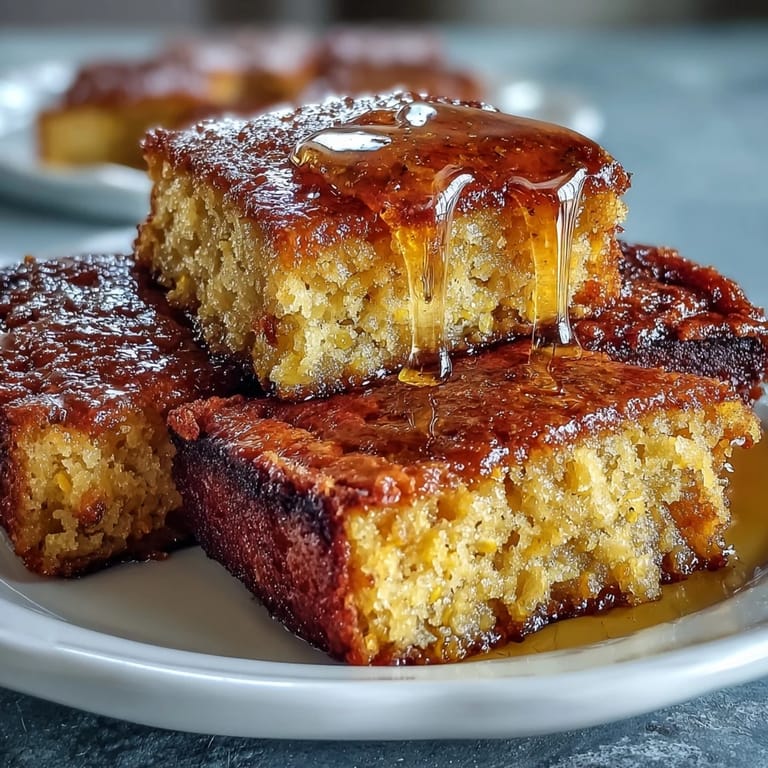
- Let the cornbread cool in the skillet for 5 to 10 minutes, then slice it into wedges and serve warm with a generous dollop of that honey butter melting into every bite.
 Pin It
 The first time someone told me they'd made cornbread using my method, they called me to say they'd understood what my grandmother meant about the skillet being the real tool. It wasn't nostalgia or family legend; it was pure physics and respect for the process. That cornbread became a bridge between us, and somehow that made it taste better.
When Cast-Iron Is Worth It
Cast-iron skillets hold heat in a way regular baking pans simply cannot, and that persistent warmth is what transforms the bottom and edges of your cornbread into something crispy and caramelized while keeping the inside tender. If you don't have cast-iron, a metal baking pan will work, but increase the oven temperature by 25°F and watch it carefully so it doesn't brown too quickly. Once you experience cornbread baked in cast-iron, you'll understand why people keep these pans for decades and pass them down like heirlooms.
The Sweet and Savory Balance
Southern cornbread sits in that perfect middle ground where it's slightly sweet but not dessert-like, making it pair beautifully with savory dishes like chili, barbecue, or fried chicken. The honey butter pushes it just a touch toward indulgence without overwhelming the meal, and that balance is what keeps people reaching for slice after slice. If you prefer your cornbread less sweet, reduce the sugar to 3 tablespoons and let the honey butter provide all the sweetness.
Making It Your Own
The base recipe is perfect as is, but cornbread is forgiving enough to welcome additions that reflect what's in your pantry or what you're in the mood for. A cup of fresh or frozen corn kernels adds texture and visual interest, shredded cheddar cheese brings savory depth, and diced jalapeños add a gentle heat that surprises people pleasantly. Add any of these to the wet mixture just before pouring into the skillet, and your guests will think you've discovered something entirely new.
- Corn kernels, cheddar cheese, and jalapeños are the holy trinity of cornbread add-ins, though you can use any one or all three depending on what you're serving.
- If you go the cheese route, use a sharp cheddar so the flavor shines through without getting lost in the cornmeal.
- Fresh corn tastes best, but frozen corn (thawed and drained) works beautifully and costs a fraction of fresh.
 Pin It
 This cornbread has become my answer when someone asks what comfort tastes like, and I think you'll find it becomes the same for you. Make it once, and you'll make it again.
Recipe FAQs
- → What type of skillet should I use?
A 10-inch cast-iron skillet is ideal for even heat distribution and a crisp crust.
- → Can I substitute buttermilk in the batter?
Yes, buttermilk adds a subtle tang and enhances moisture and tenderness.
- → How do I make the honey butter topping?
Beat softened unsalted butter with honey and a pinch of salt until smooth and fluffy.
- → What is the best way to prevent overmixing the batter?
Gently stir wet ingredients into dry until just combined; lumps are fine to keep texture.
- → Can I add extra ingredients to the cornbread?
Yes, options like corn kernels, shredded cheddar, or jalapeños can add flavor and texture.