 Pin It
 There's something about October afternoons that makes me crave this soup—the kind where you're standing in the kitchen and the smell of roasting squash fills every corner, sweet and slightly caramelized. My neighbor actually handed me a butternut squash from her garden one year, and I had no idea what to do with it besides roast it whole and hope for the best. That experiment led me here, to this silky, warming bowl that tastes like comfort feels. It's become my go-to when the weather shifts and everyone suddenly wants something warm in their hands.
I made this for my sister during her first week in a new apartment, when her kitchen was still mostly empty boxes and she hadn't figured out her new oven yet. We sat at her tiny dining table with bowls of this soup and fresh bread, and somehow it felt like a housewarming that mattered more than any party would have. She's made it twice since then, and she always texts me a photo when she does.
Ingredients
- 1 large butternut squash (about 2 lbs), peeled, seeded, and cubed: This is where the magic starts—roasting brings out a deep, almost nutty sweetness that just tastes like autumn in a spoon.
- 1 medium yellow onion, chopped: Don't skip this; it adds a subtle sweetness that rounds out the whole flavor profile without being obvious about it.
- 2 garlic cloves, peeled: Just two, because you want the garlic present but not loud, especially since it'll roast and mellow.
- 1 medium carrot, peeled and chopped: A little sweetness, a little earthiness, and it helps the texture become velvety when blended.
- 4 cups vegetable broth (gluten-free, if needed): This is your base, so use something you'd actually drink—it makes a real difference in the final taste.
- 2 tbsp olive oil: Good quality olive oil for roasting will give you better caramelization and a richer flavor in the finished soup.
- 1 tsp salt: Taste as you go; you might need a pinch more depending on your broth.
- 1/2 tsp black pepper: Fresh cracked is noticeably better here than pre-ground.
- 1/2 tsp ground nutmeg: This is essential—it's what makes people lean back and say, what is that? It bridges sweet and savory beautifully.
- 1/4 tsp cayenne pepper (optional): Just a whisper of heat if you want to wake the soup up a little.
- 1/4 cup heavy cream or coconut cream (optional): This transforms it from lovely to luxurious, but honestly, the soup stands on its own.
- Toasted pumpkin seeds (optional): They add a welcome crunch and nuttiness that contrasts with the silkiness.
- Fresh thyme (optional): A small sprig on top looks intentional and smells amazing.
Tired of Takeout? 🥡
Get 10 meals you can make faster than delivery arrives. Seriously.
One email. No spam. Unsubscribe anytime.
Instructions
- Get your oven ready:
- Preheat to 400°F (200°C) and give it a few minutes to actually get hot—this matters more than you'd think for proper caramelization.
- Prepare and oil your vegetables:
- Toss your cubed squash, onion, garlic cloves, and carrot on a baking sheet, drizzle generously with olive oil, and make sure everything gets coated. Don't be shy with the oil; it helps everything caramelize gorgeously.
- Let them roast:
- Roast for 30 to 35 minutes, stirring halfway through so nothing burns on the edges. You'll know it's done when the squash is completely tender and the edges have turned golden and slightly crispy—that's where the flavor lives.
- Combine and simmer:
- Transfer everything to a large pot, add your vegetable broth, salt, black pepper, nutmeg, and cayenne if you're using it. Bring it to a simmer over medium heat and let it bubble gently for 10 minutes so all those flavors really get to know each other.
- Blend until silky:
- Use an immersion blender right in the pot and blend until completely smooth—no chunks hiding anywhere. If you're using a countertop blender, work in batches and be careful with the hot liquid, leaving the lid slightly ajar so steam can escape.
- Taste and adjust:
- This is the moment to see if you need a little more salt, pepper, or even a tiny pinch more nutmeg. Stir in cream or coconut cream now if you want that extra richness.
- Serve and celebrate:
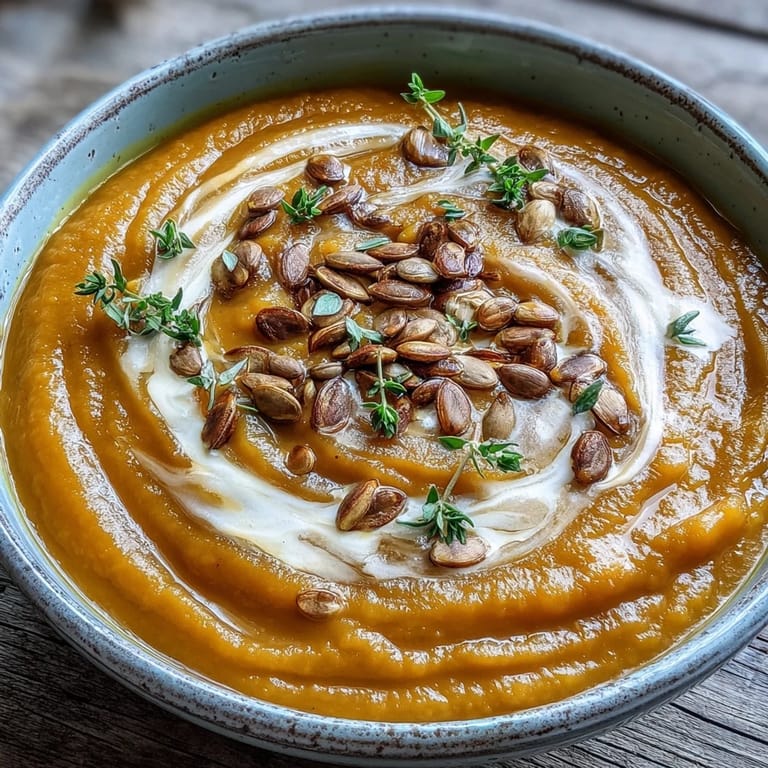
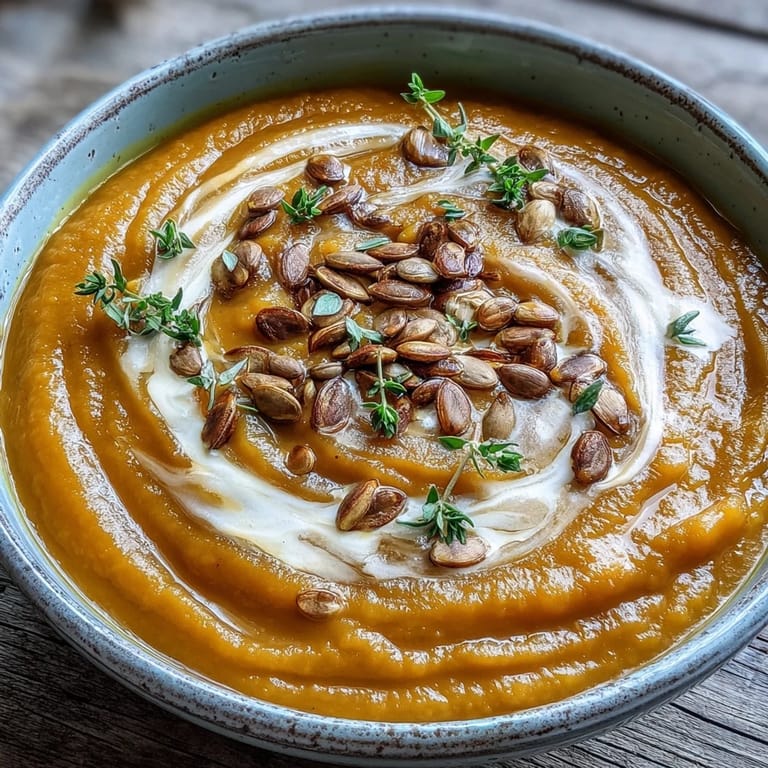
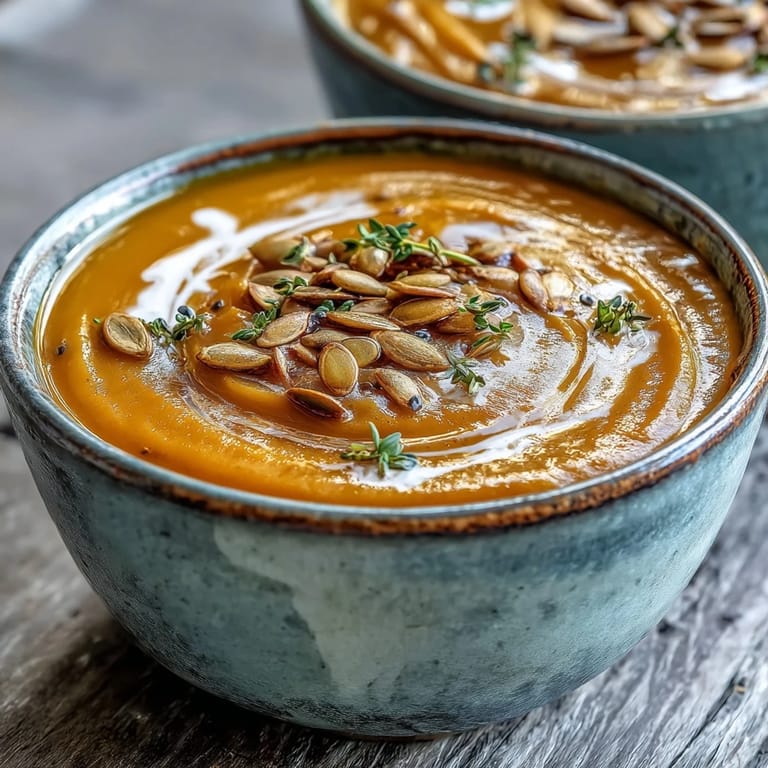
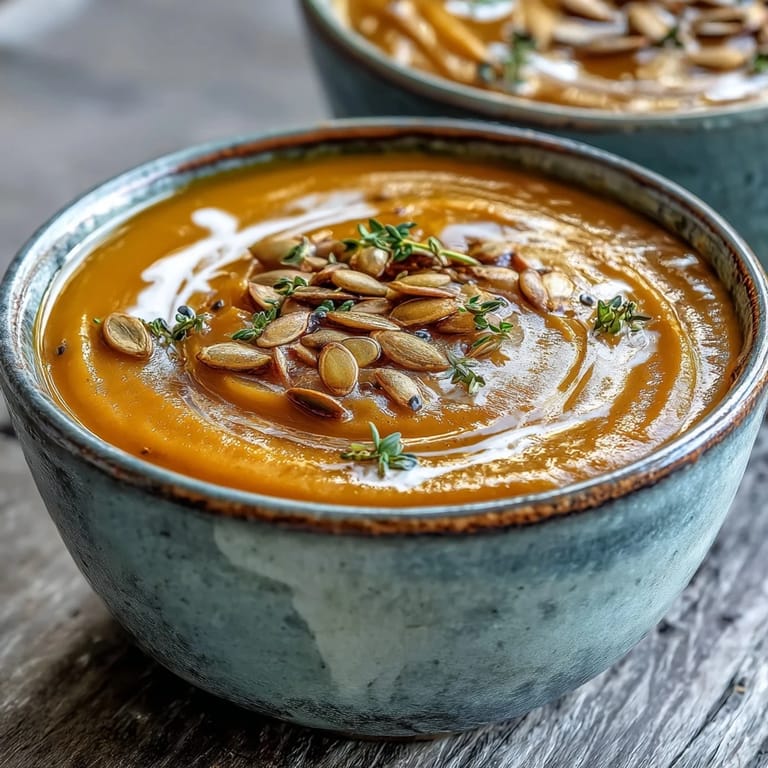
- Pour into bowls, add a swirl of cream, scatter pumpkin seeds on top, and lay a small sprig of thyme right in the center if you're feeling fancy.
 Pin It
  Pin It
 I served this soup at a small dinner party once when I was nervous about cooking for people I wanted to impress, and it turned out to be the thing everyone asked for the recipe for—not because it's complicated, but because it tastes like someone really cared. That's the thing about this soup; it's unpretentious but never feels humble.
The Magic of Roasting
Roasting vegetables before blending them into soup is genuinely a game changer, and I learned this the hard way after trying to make butternut squash soup by just simmering raw squash in broth. The roasting caramelizes the natural sugars, deepens every flavor, and gives the finished soup an almost nutty complexity that you just can't get any other way. It takes longer, yes, but it's mostly hands-off time while your oven does the work.
Why the Nutmeg Matters
Nutmeg and butternut squash are like they were made for each other, and I think it's because both have this warm, slightly sweet character that somehow tricks your brain into feeling cozy and safe. The amount seems small—just half a teaspoon—but it's the difference between soup that tastes good and soup that tastes like home. You can always add a tiny bit more, but you can't take it back once you've overseasoned.
Serving and Storage Ideas
This soup is honestly just as good reheated as it is fresh, which makes it perfect for meal prep or for lazy evenings when you want something warm but don't want to cook. I've frozen it in individual portions and pulled them out on nights when everything felt overwhelming and I just needed something that felt like care.
- Pair it with crusty bread or a grilled cheese sandwich for a classic combination that never disappoints.
- Swirl in a bit of balsamic vinegar or apple cider for a subtle tang that brightens everything up.
- Add a small diced apple to the roasting tray next time for a gentle sweetness that feels natural rather than forced.
 Pin It
  Pin It
 There's something deeply satisfying about a soup this good that asks so little of you—just some chopping, a little patience, and a blender. Make this for someone who needs warmth, or make it for yourself on a day when the world feels a bit too much.
Recipe FAQs
- → Can I make this soup ahead of time?
Yes, this soup stores beautifully in the refrigerator for up to 5 days or can be frozen for up to 3 months. Reheat gently on the stovetop, adding a splash of broth if needed to adjust consistency.
- → How do I make this soup vegan?
Simply substitute coconut cream for the heavy cream, and ensure your vegetable broth is vegan-friendly. The soup will remain just as creamy and flavorful with this plant-based swap.
- → What can I serve with butternut squash soup?
This soup pairs wonderfully with crusty artisan bread, grilled cheese sandwiches, or a fresh green salad. It also makes an elegant starter for holiday meals or dinner parties.
- → Can I use pre-cut butternut squash?
Absolutely! Pre-cut squash saves significant prep time and works perfectly for this dish. Just ensure the pieces are roughly the same size for even roasting and adjust cooking time as needed.
- → Why is roasting the vegetables important?
Roasting caramelizes the natural sugars in the vegetables, creating deeper, more complex flavors than boiling or steaming. This technique adds a subtle sweetness and rich, nutty undertones to the finished soup.
- → How can I adjust the thickness of the soup?
Add more vegetable broth during blending for a thinner consistency, or simmer uncovered to reduce and thicken. You can also add less broth initially and adjust to your preferred texture after blending.