 Pin It
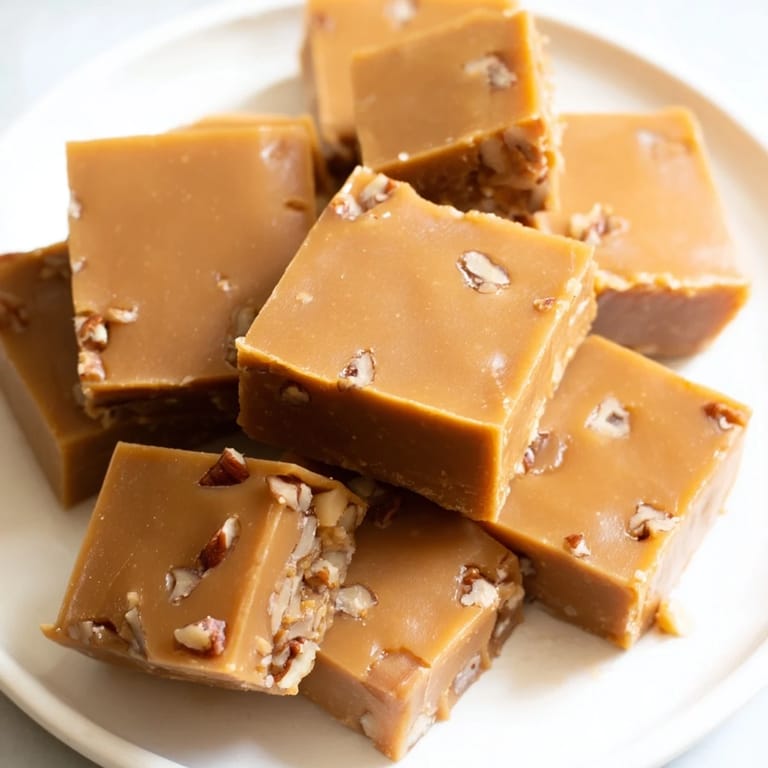
 My grandmother kept a worn recipe card for penuche fudge tucked behind her stove, the edges softened from decades of handling. One rainy afternoon, I watched her make it, mesmerized by how brown sugar and milk transformed into something that tasted like caramel and butter had a secret meeting in your mouth. She never used a mixer—just a wooden spoon and patience—and somehow that made it taste better. Now whenever I make this fudge, I can almost hear her humming in the kitchen, and I understand why she made it so often.
I made this for my neighbor last winter when she was going through a rough time, pressing the squares into a tin with brown parchment between the layers. She called three days later just to say she'd eaten half of it sitting by her kitchen window in the quiet morning. That's when I realized penuche fudge isn't just candy—it's comfort you can hold in your hand.
Ingredients
- Light brown sugar (2 cups, packed): This is the soul of penuche—that molasses depth is what makes it different from regular fudge. Pack it firmly when you measure, or the batch will be too soft.
- Granulated sugar (1 cup): This balances the brown sugar and helps you hit the right temperature without the mixture seizing.
- Whole milk (3/4 cup): Don't skip to condensed milk or cream thinking you're being clever; whole milk is what creates that silky texture.
- Unsalted butter (1/2 cup, cubed): Cutting it into cubes helps it distribute evenly and prevents hot spots that can cause crystallization.
- Fine sea salt (1/4 tsp): This tiny amount makes the caramel notes sing without tasting salty—trust it.
- Pure vanilla extract (1 1/2 tsp): The difference between vanilla extract and imitation is noticeable here, so don't compromise.
- Pecans or walnuts (1 cup, chopped, optional): Toast them lightly first if you have time; it deepens their flavor and gives the fudge a subtle crunch.
Tired of Takeout? 🥡
Get 10 meals you can make faster than delivery arrives. Seriously.
One email. No spam. Unsubscribe anytime.
Instructions
- Prepare Your Pan:
- Line your 8-inch square pan with parchment paper, letting it hang over two sides like a sling. Butter the paper lightly so the finished fudge doesn't stick—this is your escape route.
- Combine and Heat:
- Measure your sugars carefully, pack the brown sugar, and combine everything in a heavy-bottomed saucepan over medium heat. Stir gently until the sugars dissolve and you see lazy bubbles forming around the edges.
- Watch the Thermometer:
- Clip your candy thermometer to the side of the pan and stop stirring—this is crucial. The mixture needs to reach 238°F (soft-ball stage), which takes about 10-12 minutes. You'll see it go from bubbly to a slightly deeper golden color.
- Cool and Beat:
- Remove from heat and let it sit untouched for exactly 10 minutes—this cooling period is what prevents your fudge from becoming grainy. Then add vanilla and beat with a wooden spoon or mixer on low speed until it thickens and loses its glossy sheen, about 5-8 minutes.
- Add Nuts if Using:
- Fold in your chopped nuts gently just as the mixture is losing its gloss but before it becomes too stiff to combine easily.
- Pour and Set:
- Work quickly now—pour into your prepared pan and smooth the top with a spatula. The fudge sets as it cools, so you have maybe two minutes to get it where you want it.
- Finish and Cut:
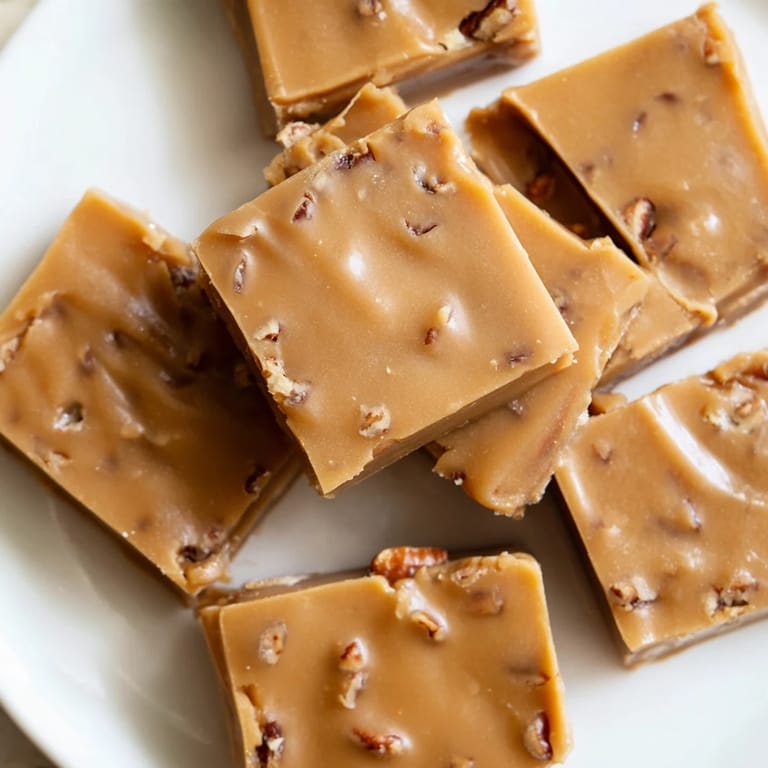
- Let it sit at room temperature for at least an hour until it's completely firm. Lift the whole block out using the parchment overhang and cut into 1-inch squares with a sharp knife dipped in hot water for clean edges.
 Pin It
 The first time I got this right, I tasted it and understood why my grandmother had made it for sixty years. It was worth every careful moment, every watchful minute at the stove. That's when candy stopped being just something sweet and became proof that paying attention matters.
The Science of Smooth Fudge
Fudge is all about controlling crystallization, which is why temperature and timing matter so much. When you heat sugar and milk to soft-ball stage and then cool it before beating, you're creating tiny crystals that stay suspended in the butter and sugar mixture, giving you that smooth, melt-in-your-mouth texture. If you skip the cooling step or beat it too early, larger crystals form and you get gritty fudge. It's not magic—it's chemistry you can taste.
Variations That Actually Work
Once you master the basic penuche, small additions open up a world of flavor. A pinch of cinnamon or a dash of maple extract in the final beating stage adds warmth without overwhelming the caramel notes. Some people swear by a tiny bit of espresso powder to deepen the brown sugar flavor, though you have to be careful—too much and it tastes bitter instead of sophisticated. The key is restraint; you're adding whispers, not shouts.
Storage and Gifting
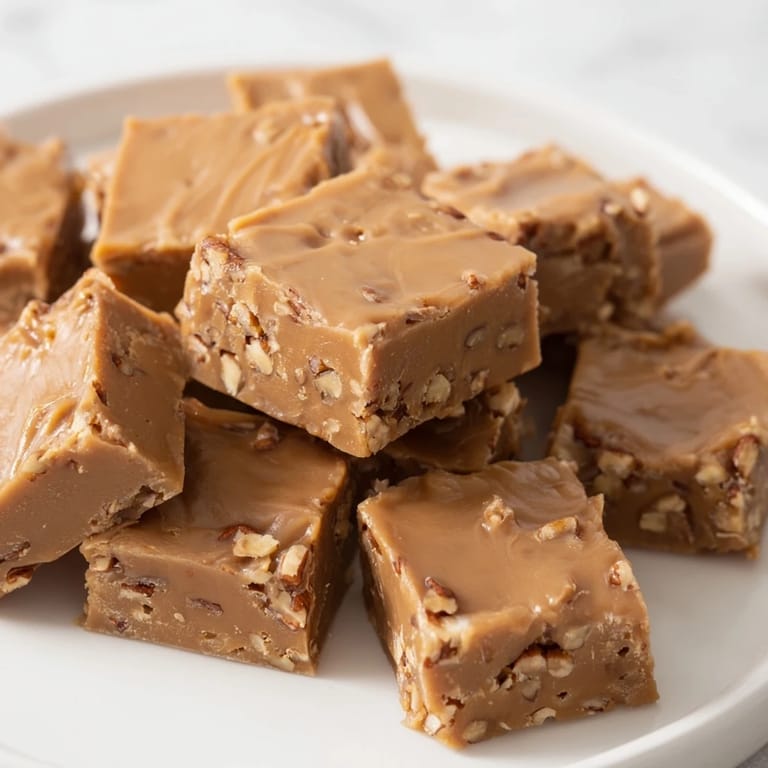
Keep your fudge in an airtight container at room temperature, and it will last happily for a week, though honestly it rarely lasts that long in my house. For gifting, layer squares between parchment paper in a tin or box, and everyone will think you spent the whole day cooking.
- Room temperature storage keeps the texture perfect—refrigeration can make it too firm and cold-tasting.
- Cut your squares slightly thicker than you think looks right; thin pieces shatter instead of offering that satisfying snap and melt.
- If the kitchen is humid, let the fudge set a few extra hours before cutting and storing, or it might weep a little.
 Pin It
 Make this fudge when you want to give someone something that says you paid attention and cared enough to get it right. It's that kind of candy.
Recipe FAQs
- → What gives penuche its caramel-like flavor?
The rich caramel notes come primarily from light brown sugar cooked carefully with butter and milk, allowing the sugars to caramelize gently.
- → How do I know when the mixture reaches the right stage for setting?
Using a candy thermometer, cook the mixture until it reaches 238°F (114°C), known as the soft-ball stage, which is essential for proper texture.
- → Can I add nuts to this confection?
Yes, folding in chopped pecans or walnuts adds a pleasant crunch, but they can be omitted for a nut-free version.
- → What tools are essential for preparing this sweet treat?
An 8-inch square baking pan lined with parchment, a medium saucepan, candy thermometer, wooden spoon or mixer, spatula, and a sharp knife are recommended.
- → How should I store the finished confection?
Store in an airtight container at room temperature for up to one week to maintain freshness and texture.