 Pin It
 The first time I made a King Cake, I was standing in my kitchen at midnight on Epiphany Eve, convinced I could pull off something entirely unfamiliar. My grandmother had mentioned it once in passing—a ring-shaped cake with hidden surprises—and somehow that stuck with me through years of cooking. What I didn't expect was how the warm, spiced dough would fill my apartment with this nostalgic sweetness, or how the whole process would feel less like following instructions and more like joining a tradition centuries old. There's something about a cake that's meant to be shared, broken open, full of possibility.
I'll never forget my neighbor's face when she found the plastic baby in her slice—she laughed so hard she nearly dropped it. Suddenly, everyone at the table was leaning in, watching the remaining cake like it held actual treasure. By the end of dessert, she'd already volunteered to host next year's gathering, and somehow that little figurine had done what all the pretty colors and fancy icing couldn't quite manage on their own: it had made the moment genuinely memorable.
Ingredients
- Warm milk: The temperature matters more than you'd think—too hot and it'll kill the yeast, too cool and it won't wake up. Aim for that gentle warmth, like testing bathwater on your inner wrist.
- Active dry yeast: Make sure it's fresh (check that date on the envelope) because stale yeast means dense bread and genuine disappointment.
- All-purpose flour: Don't sift it unless you want to overthink things; just spoon it into your measuring cup and level it off.
- Unsalted butter: Softened means it'll actually blend in without clumpy bits—let it sit on the counter for fifteen minutes if you're in a hurry.
- Eggs: Room temperature ones incorporate into the dough more smoothly, creating a tender crumb.
- Spices (nutmeg and cinnamon): These aren't background flavors—they're what make King Cake taste like celebration and memory combined.
- Brown sugar and cinnamon (for filling): This mixture should smell like autumn's best moments; don't skimp on the cinnamon.
- Powdered sugar and vanilla (for icing): The icing should be pourable but still coat the back of a spoon—thick enough to hold those colored sugars but thin enough to drip a little.
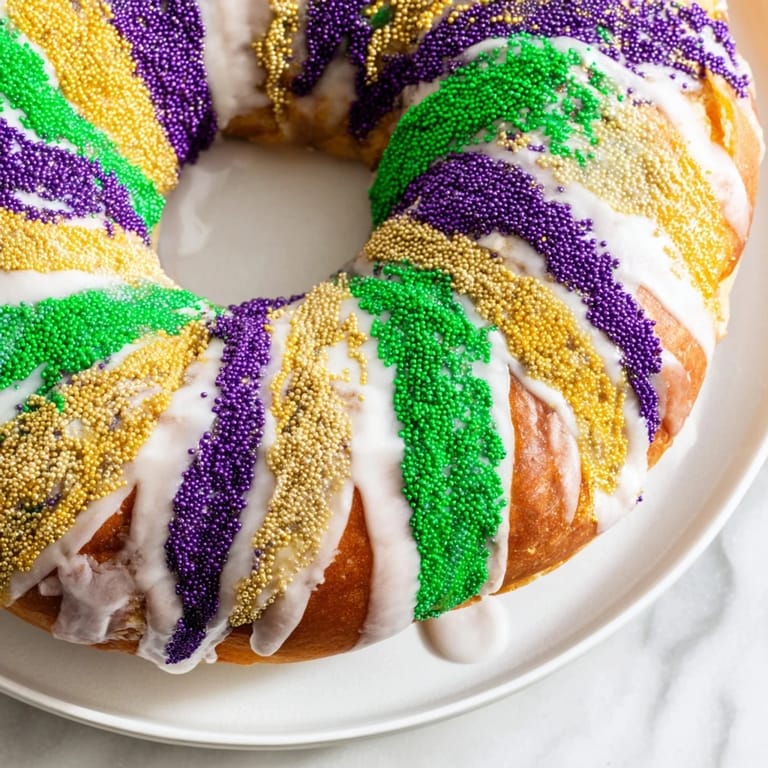
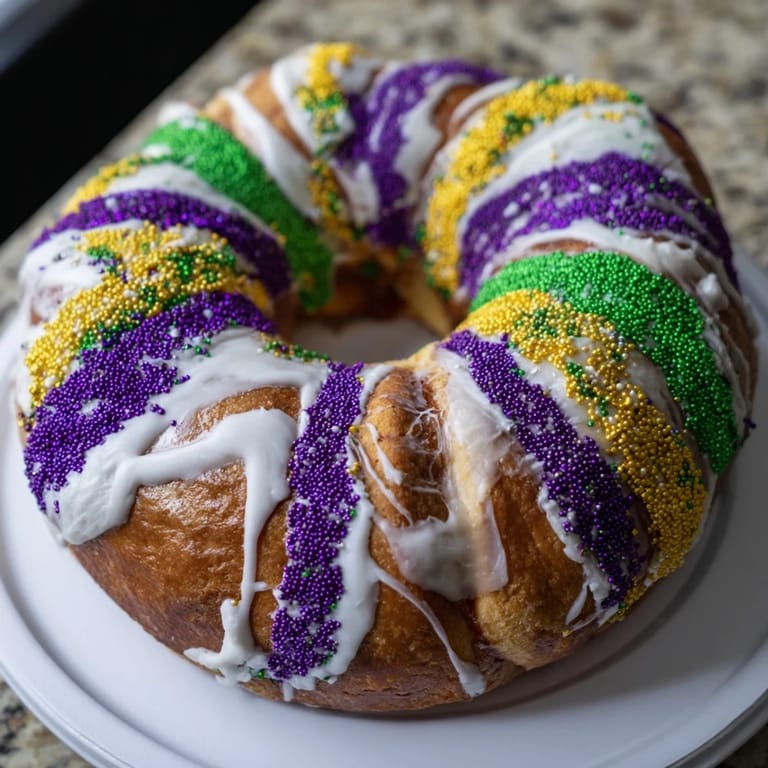
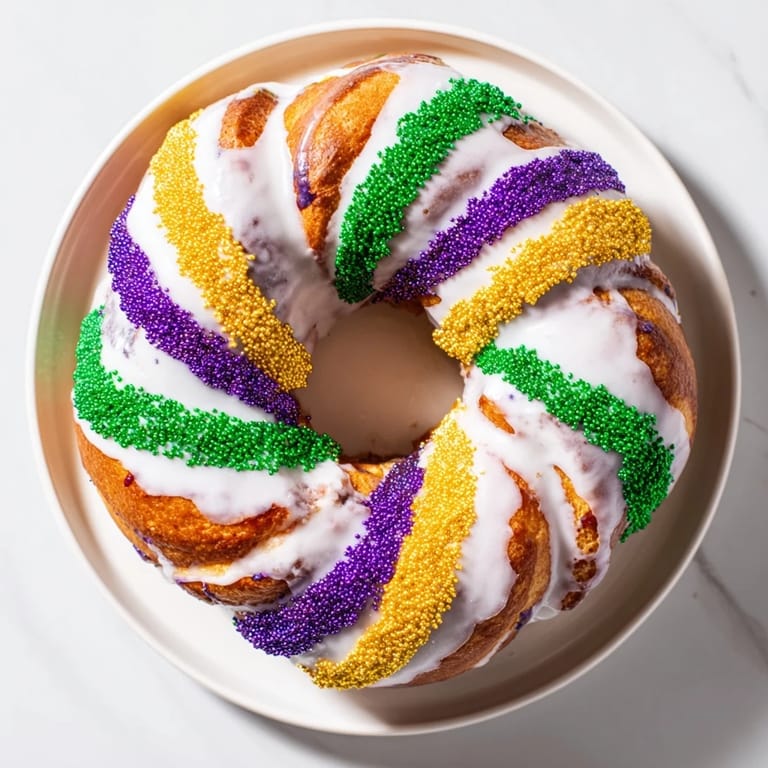
- Colored sugars (purple, green, gold): These are essential to the visual magic; use them generously and don't worry about staying inside the lines.
Tired of Takeout? 🥡
Get 10 meals you can make faster than delivery arrives. Seriously.
One email. No spam. Unsubscribe anytime.
Instructions
- Wake the yeast:
- Combine warm milk with yeast and a tablespoon of sugar in a small bowl and let it sit until foamy, about five to ten minutes. You'll know it's working when the surface looks alive with tiny bubbles.
- Build the dough:
- Mix flour, remaining sugar, salt, and spices in a large bowl, then add the buttery, eggy yeast mixture. Stir until everything comes together into a shaggy dough that's ready to be worked.
- Knead with intention:
- Work the dough on a floured counter for eight to ten minutes until it becomes smooth and elastic, pushing it away with the heel of your hand in a rhythm that's almost meditative. The dough will transform from rough to supple, and you'll feel the exact moment it's ready.
- First rise:
- Place the dough in a greased bowl, cover it loosely, and let it sit in a warm spot (near a sunny window works) for about one to one and a half hours. It should roughly double in size and feel puffy when you poke it.
- Prepare the filling:
- While the dough rises, mix soft butter with brown sugar and cinnamon until the mixture looks like wet sand.
- Shape the ring:
- Punch down the risen dough and roll it into a rectangle about ten by twenty inches. Spread the butter mixture over it, sprinkle the cinnamon sugar, then roll it tightly from the long side and connect the ends to form a circle.
- Second rise:
- Place the ring on parchment paper, cover it, and let it rise for forty-five minutes to an hour until it's visibly puffed. Meanwhile, preheat your oven to 350°F.
- Bake until golden:
- Bake for twenty-five to thirty minutes; the cake should be golden brown and smell absolutely irresistible. Let it cool completely on a wire rack before moving on.
- Create the icing:
- Whisk powdered sugar with milk and vanilla until you have something that drizzles smoothly but still clings to the cake. It should be thick enough to hold its shape but thin enough to feel pourable.
- Decorate with flourish:
- Drizzle the icing over the cooled cake, then immediately—while it's still wet—sprinkle on the colored sugars in alternating bands. This is where you make it beautiful.
 Pin It
 There's a moment, right after you set that warm cake on the cooling rack and step back to look at it, when you realize you've made something that feels both personally yours and connected to something much bigger. It's not just bread; it's a story that dozens of families have been telling for generations, and now you're telling it too.
The Magic of the Hidden Surprise
That plastic baby figurine isn't just a cute tradition—it's the thing that turns this from a dessert into an event. The person who finds it becomes responsible for hosting next year's celebration, which means the cake creates its own future before you've even finished the first slice. I've seen this tiny piece of plastic transform quiet gatherings into genuinely excited moments, where otherwise composed adults are carefully cutting their cake and examining each bite with genuine anticipation. It's remarkable how something so small can change the entire energy of eating together.
Flavor Variations Worth Trying
While the traditional cinnamon filling is where this cake truly shines, a cream cheese mixture (eight ounces cream cheese blended with a quarter cup sugar and a teaspoon of vanilla) creates a richer, tangier version that some prefer. You could also experiment with a chocolate cinnamon swirl or even a subtle orange zest mixed into the dough itself. The beauty of this recipe is that once you understand the basic structure, you can adjust the spices and fillings to match whatever mood you're in or what your kitchen has on hand.
Making It Work for Your Table
King Cake pairs beautifully with strong coffee in the morning or with sparkling wine during an afternoon celebration. The sweetness and spice mean it works equally well as an elegant dessert or as something you slice into informal pieces and share casually. If you're making this for people with dietary restrictions, consider that it contains gluten, eggs, and dairy—but the skeleton of this recipe is adaptable if you have the time to experiment with substitutions.
- Serve it slightly warm for the most tender crumb, though room temperature actually lets the flavors shine a bit more clearly.
- This cake keeps well wrapped at room temperature for two days, though it's usually gone by then.
- If you're nervous about the yeast, just remember that it's remarkably forgiving as long as you didn't pour boiling water on it—trust the process.
 Pin It
 Making King Cake connects you to something beyond just sugar and flour—it's a moment when you're part of a much longer conversation about celebration and tradition. Once you've made it once, I suspect it'll be something you return to, each time adding your own small story to the ones already baked into this cake.
Recipe FAQs
- → What type of flour is best for this sweet bread?
All-purpose flour works well, providing the right structure and softness for the dough.
- → How is the colorful sugar decoration applied?
Colored sugars in purple, green, and gold are sprinkled in alternating bands on wet vanilla icing, creating a vibrant finish.
- → Why does the dough require two rising periods?
Two rises develop a light, airy texture and enhance flavor by allowing the yeast to fully ferment.
- → Can the cinnamon sugar filling be substituted?
Yes, cream cheese filling is a tasty alternative, blending sweetness and creaminess within the swirl.
- → Is the plastic baby figurine edible?
No, the figurine is not edible and should be handled carefully, especially around children.
- → What beverages pair well with this bread?
Coffee and sparkling wine complement the sweet spices and rich sugars nicely.