 Pin It
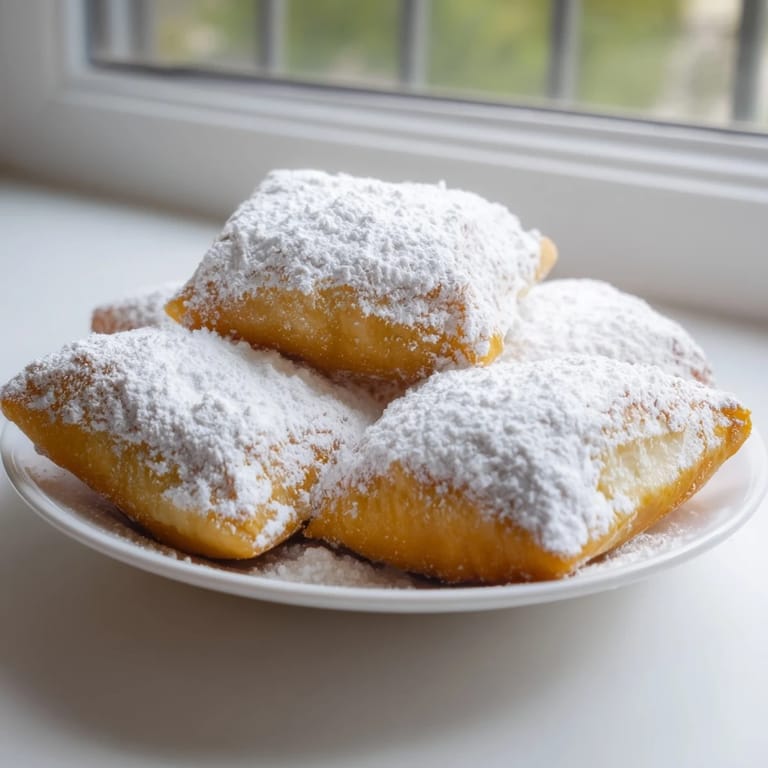
 The first time I stood in front of a pot of hot oil with a piece of dough in my hand, I was genuinely nervous. I'd watched my friend pull fresh beignets from the fryer at a small café in New Orleans, and the way the powdered sugar seemed to float around them like snow made them look impossible to recreate at home. But there's something about that crispy exterior giving way to a pillowy, yeasty inside that stayed with me long after I left the city. I became determined to master them, and after a few attempts—and a few too many sugar-dusted mishaps—I finally figured out the rhythm. Now, every time I make beignets, that moment of dropping the dough into hot oil still feels a little like magic.
I remember making these for a small gathering on a Saturday morning, and my kitchen turned into this unexpected gathering spot while they were frying. People kept drifting in, drawn by the smell of yeast and caramelizing sugar, and suddenly everyone was standing around with coffee and a warm beignet, talking about nothing in particular. That's when I realized these aren't just dessert—they're an invitation to slow down and be present with people you care about.
Ingredients
- All-purpose flour: The base of everything; make sure it's fresh because old flour can make your dough dense instead of tender.
- Warm water: This needs to be around 110°F so the yeast wakes up properly—too hot and you'll kill it, too cool and nothing happens.
- Active dry yeast: One packet is all you need, and it's worth letting it bloom in that pinch of sugar and water for a full 5 minutes so you can see the foam.
- Whole milk and egg: These add richness and help the dough become that signature pillowy texture.
- Melted butter: Adds flavor and tenderness; let it cool slightly so it doesn't scramble the egg.
- Granulated sugar and salt: Sugar feeds the yeast and sweetens the dough, while salt controls the rise and deepens flavor.
- Vegetable oil: For frying; choose a neutral oil with a high smoke point so it doesn't impart any taste.
- Powdered sugar: The finishing touch that makes them look and taste like the real thing.
Tired of Takeout? 🥡
Get 10 meals you can make faster than delivery arrives. Seriously.
One email. No spam. Unsubscribe anytime.
Instructions
- Wake up the yeast:
- In a small bowl, combine the warm water, a pinch of sugar, and yeast, then let it sit for 5 minutes. You'll see it foam up and smell that distinctive yeasty aroma—that's how you know it's alive and ready to work.
- Build the dough:
- Mix flour, remaining sugar, and salt in a large bowl, then pour in the foamy yeast mixture along with milk, egg, and melted butter. Stir until everything comes together into a shaggy, sticky mess.
- Knead until smooth:
- Work the dough by hand or with a stand mixer for 5 to 7 minutes until it becomes smooth, elastic, and springs back when you poke it. You'll feel the transformation under your hands.
- Let it rise:
- Place the dough in an oiled bowl, cover it loosely with plastic wrap or a clean towel, and set it in a warm spot for 1 to 1.5 hours until it's doubled in size. The wait is worth it.
- Shape the beignets:
- Punch down the puffy dough and transfer it to a floured surface, then roll it out to about 1/4 inch thick. Using a sharp knife or pizza cutter, cut it into 2-inch squares and try to keep them roughly even so they cook at the same rate.
- Heat your oil:
- Pour enough vegetable oil into a deep pot or fryer to submerge the beignets, and bring it to 350°F. This temperature is crucial—too cool and they'll be greasy, too hot and they'll brown before the inside cooks through.
- Fry until golden:
- Working in batches so you don't crowd the oil, gently slide a beignet into the hot oil and let it cook for about 1 minute before flipping. Once it's golden brown on both sides, it's done.
- Drain and finish:
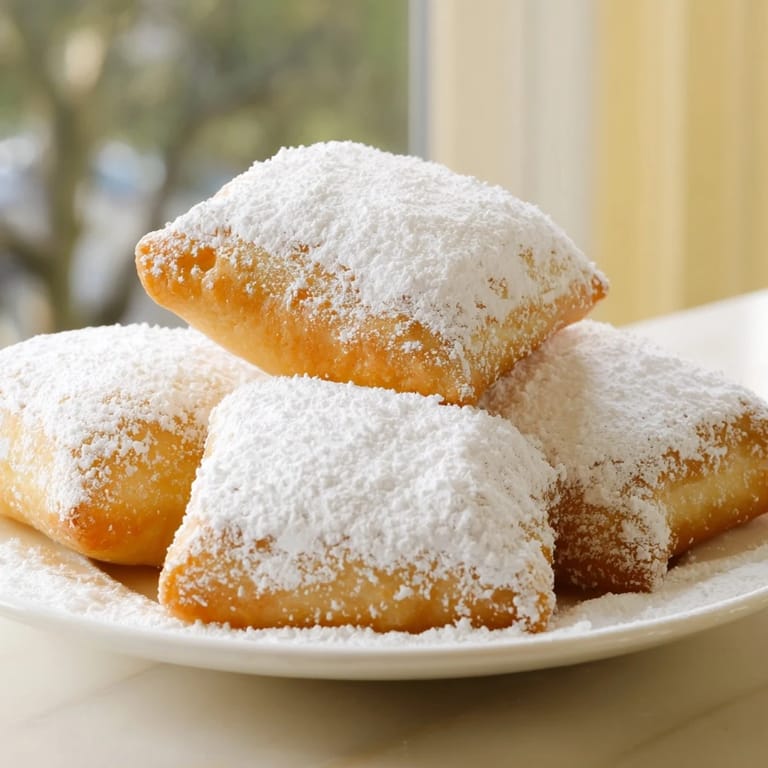
- Remove each beignet with a slotted spoon and set it on paper towels to drain. While they're still warm and slightly steamy, dust them generously with powdered sugar until they look like little snowballs.
 Pin It
 The best part about beignets is that moment right after you dust them with powdered sugar, when you pick one up and take that first bite. The outside cracks slightly, clouds of powdered sugar puff into the air, and you get that perfect contrast of crispy fried exterior and soft, tender inside. It's a small thing, but it's the reason people line up for these in New Orleans.
The Right Temperature Makes All the Difference
I learned this lesson the hard way after a batch came out dense and heavy instead of light and pillowy. The dough had been in a cold kitchen, and the yeast barely activated. Now I always make sure my water is properly warm, and I let the dough rise in the warmest spot I can find—sometimes that's near the oven, sometimes it's by a sunny window. Even a few degrees makes a noticeable difference in how much the dough rises and how tender the final beignets turn out to be.
Making Them Ahead and Reheating
You can fry beignets several hours ahead and reheat them briefly in a 350°F oven for a few minutes, though they're genuinely best enjoyed fresh and warm straight from the fryer. If you want to prepare ahead, you can also shape the dough, refrigerate the squares on a floured tray for up to 8 hours, and fry them cold—they'll still puff beautifully. There's a real convenience to this if you're planning to serve them for breakfast or brunch.
Serving and Flavor Variations
The classic pairing is café au lait, which is strong black coffee mixed with hot milk in equal parts—the beignets' sweetness balances the coffee's bitterness perfectly. If you want to experiment, try adding a teaspoon of vanilla extract to the dough, or a whisper of nutmeg for a warmer spice note. Some people like to fill them with jam or chocolate before frying, though that requires a bit more finesse.
- Serve them immediately while they're still warm and the sugar coating hasn't had time to dissolve.
- Don't skip the powdered sugar—it's not just decoration, it's part of what makes them taste right.
- A batch of 20 beignets feeds about 8 to 10 people as a dessert, or 4 to 5 hungry people for breakfast.
 Pin It
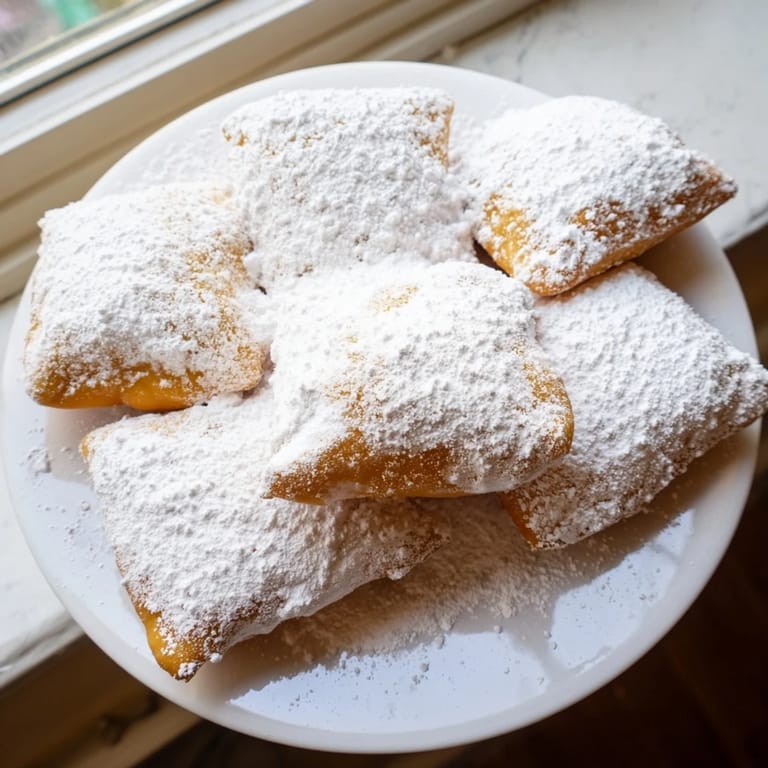
 Making beignets is less about precision and more about understanding what good dough feels like and respecting the oil's temperature. Once you get there, you'll have a recipe that brings people together and reminds you why fried dough dusted with sugar has been beloved for centuries.
Recipe FAQs
- → What makes the dough fluffy?
The yeast activates during rising, creating air pockets that result in a light and tender texture after frying.
- → Can I prepare the dough in advance?
Yes, after the initial rise, the dough can be refrigerated overnight to develop flavor and make frying easier the next day.
- → What oil is best for frying?
Vegetable oil with a high smoke point is ideal to achieve a crisp, golden exterior without burning.
- → How do I know when the squares are cooked through?
Fry until both sides are golden brown, usually 1–2 minutes per side, ensuring puffed and tender interiors.
- → Are there flavor variations to try?
Adding a touch of vanilla extract or nutmeg to the dough offers a subtle depth to the traditional flavor.