 Pin It
 I discovered this toffee on a rainy afternoon when my neighbor Margaret mentioned her grandmother's old recipe—the kind passed down through holiday seasons and borrowed by half the neighborhood. She described it so vividly, the butter bubbling to that perfect golden stage, the chocolate melting into the crevices, that I had to try it immediately. The first batch taught me patience; I yanked it off the heat too early and ended up with something closer to butterscotch. But the second time, watching for that amber color with a thermometer in hand, everything clicked. Now I make it whenever I want to feel like I've done something genuinely worth bragging about.
I'll never forget bringing a tin of these to a work potluck and watching my usually reserved colleague actually pause mid-conversation to eat another piece. She asked for the recipe, then her sister asked, then somehow I became the toffee person. It's strange how a simple candy can accidentally become your signature, the thing people remember you by.
Ingredients
- Unsalted butter (1 cup): Use good quality butter—it's your foundation and you'll taste every ounce of it, so don't cheap out here.
- Granulated sugar (1 cup): This is what transforms into that glossy amber liquid that makes toffee actually toffee.
- Fine sea salt (1/4 tsp): Just a whisper, but it's the secret handshake that makes the sweetness sing.
- Water (2 tbsp): Acts as a buffer so the butter and sugar meld smoothly without seizing into a grainy mess.
- Pure vanilla extract (1 tsp): The ingredient nobody expects but everyone tastes—it softens the sharpness.
- Milk chocolate (200 g): Chop it yourself if you have time; the pieces melt more evenly than chips.
- Toasted sliced almonds (3/4 cup): Buy them already toasted if you can find them, or toast raw ones yourself for about 8 minutes at 350°F.
Tired of Takeout? 🥡
Get 10 meals you can make faster than delivery arrives. Seriously.
One email. No spam. Unsubscribe anytime.
Instructions
- Prep your pan:
- Line a 9x13-inch baking pan with parchment paper, letting it hang slightly over the edges so you can lift the finished toffee out cleanly. This step saves you hours of scraping and cursing later.
- Combine your base:
- In a heavy-bottomed saucepan, add butter, sugar, salt, and water together. The water keeps everything from seizing, so don't skip it even though it seems odd. Stir constantly over medium heat until the butter melts and everything looks like wet sand.
- Watch it transform:
- Keep stirring, stop for nothing—this is when you learn the difference between good toffee and burnt toffee. You're looking for that deep golden amber color, and your candy thermometer should read 300°F (the hard crack stage). It'll take about 10-15 minutes, and it feels like forever until suddenly it's there.
- Pour and work fast:
- Remove from heat, stir in vanilla, then immediately pour onto your prepared pan and spread it even with a spatula. The toffee sets quickly, so hesitation isn't your friend here.
- Layer the chocolate:
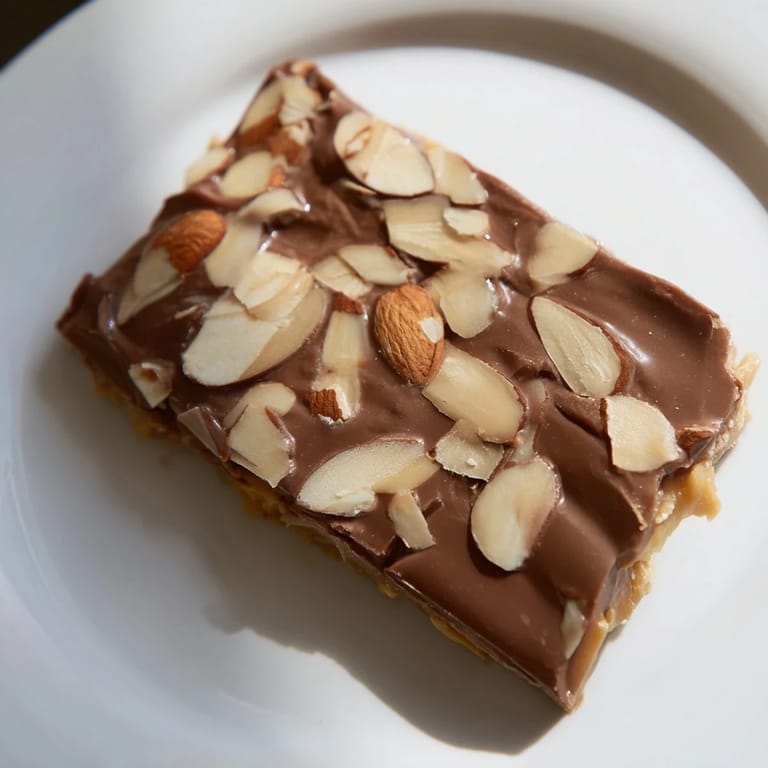
- After 2 minutes, scatter the chopped chocolate over the hot toffee—the residual heat will start melting it right away. Wait another 2 minutes, then gently spread it into an even layer. You're not fighting it, just coaxing it.
- Top with almonds:
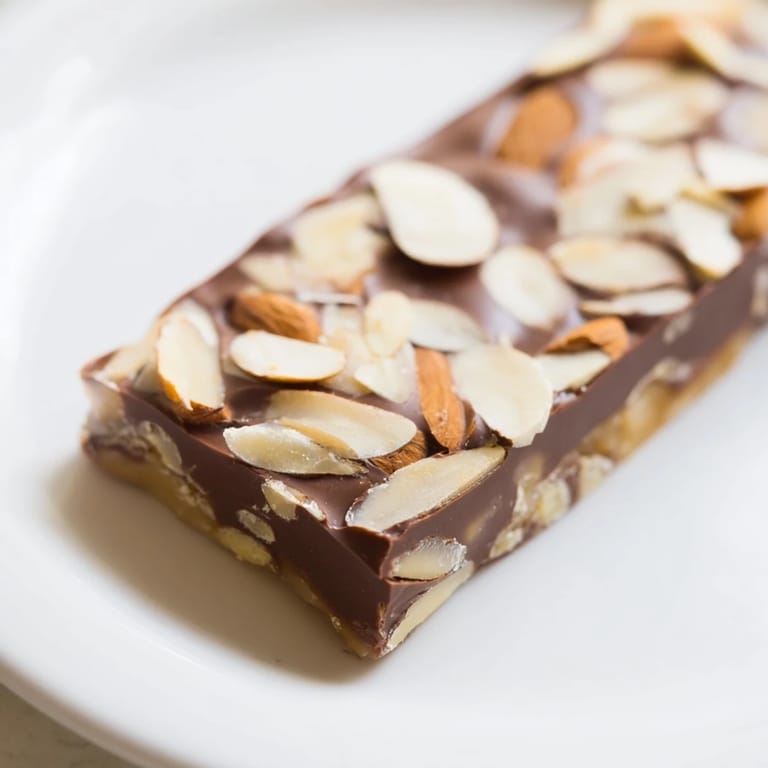
- Sprinkle the toasted almonds over the soft chocolate and press them in lightly with your fingertips so they anchor into place. This is where it goes from good to show-stopping.
- Let it cool:
- Room temperature cooling takes about 2 hours, or you can speed this up by putting it in the refrigerator for 30-45 minutes. Patience here determines whether you get clean snaps or sad, bendy pieces.
- Break and store:
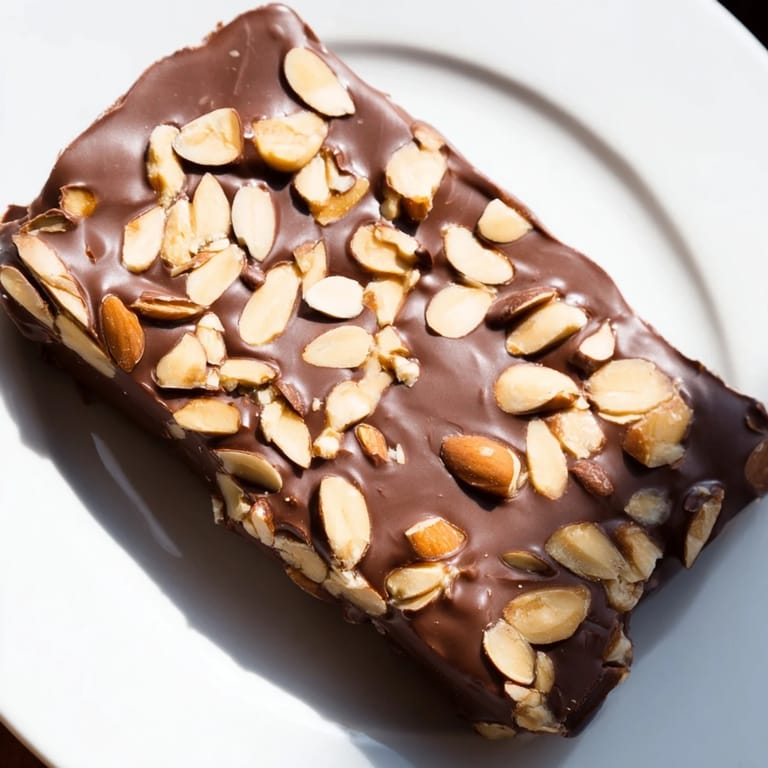
- Once completely set, break the toffee into pieces with your hands—jagged edges are part of the charm. Store in an airtight container at room temperature for up to 2 weeks, though it never lasts that long.
 Pin It
 There's something almost ceremonial about making toffee. You stand at the stove, wooden spoon in hand, watching butter and sugar become something entirely different. It requires your full attention, but that's also what makes it feel special—in a world of shortcuts, you've actually made something with your own two hands.
Why Homemade Beats Store-Bought
Commercial toffee often tastes waxy and over-processed, like someone prioritized shelf-life over flavor. When you make it at home, you taste the actual butter, the actual chocolate, the actual almonds. The texture is snappier, fresher, more alive. Plus, there's zero mystery about what went into it.
Troubleshooting Your Toffee
Toffee is forgiving if you know what to watch for. If your finished candy feels chewy instead of crisp, you didn't cook it to 300°F—pull out that thermometer next time and ignore the clock. If the chocolate won't spread smoothly, you waited too long after pouring; that two-minute window is real. If your almonds slide off, you didn't press them in firmly enough while the chocolate was still warm. None of these are failures, they're just learning moments.
Creative Variations and Swaps
Once you've mastered the base recipe, toffee becomes a canvas. Dark chocolate instead of milk chocolate gives you a sophisticated bitterness that cuts through the sweetness beautifully. Hazelnuts or pecans work just as well as almonds, or you could try a mix. I've even made a batch with a sprinkle of fleur de sel on top instead of mixed into the base—that pop of salt at the end changed everything.
- Try dark chocolate for a grown-up, less-sweet version that pairs beautifully with espresso.
- Swap almonds for crushed pistachios or toasted sesame seeds for something completely different.
- A tiny pinch of cayenne stirred into the toffee base creates an unexpected warmth that lingers.
 Pin It
 Toffee is proof that sometimes the simplest ingredients—butter, sugar, chocolate, nuts—can become something extraordinary when you give them attention and respect. Make a batch, break it into shards, and gift it to someone who deserves to know they're thought of.
Recipe FAQs
- → What is the best chocolate type to use?
Milk chocolate is traditional for its creamy sweetness, but dark chocolate can be used for a richer, bittersweet flavor.
- → How do I know when toffee is ready?
Cook the mixture until it reaches 300°F (150°C) on a candy thermometer, indicating the hard crack stage for proper texture.
- → Can I omit the almonds?
Yes, almonds provide crunch and flavor but can be replaced with toasted seeds or left out for a nut-free alternative.
- → How should I store the finished toffee?
Keep pieces in an airtight container in a cool, dry place to maintain freshness for up to two weeks.
- → What tools are essential for making this toffee?
A heavy-bottomed saucepan, candy thermometer, and spatulas are key for even cooking and spreading.