 Pin It
 My friend Marco called me on a Tuesday evening, desperate for dinner ideas with exactly twenty minutes to spare before his kids got home from soccer. I remembered the time a hibachi chef near my office made steak fried rice with such theatrical flair that I'd been chasing that magic ever since, so I walked him through this one-pan version over the phone. What struck me was how the sizzle of cubed sirloin hitting hot oil sounded almost as good as the actual restaurant experience, minus the onion volcano and the wait.
I made this for my partner last winter when we were both too tired to go out but too hungry to settle for reheating leftovers. Watching the eggs scramble right there in the middle of the rice while the steak sizzled nearby felt oddly meditative, like I was conducting a tiny orchestra in cast iron. By the time everything came together, we were both hovering over the pan, stealing bites with our forks before it even hit the plates.
Ingredients
- Sirloin steak, 1 lb cut into 1-inch cubes: The cubes cook faster than slices and get those beautiful caramelized edges; don't skip the marinating step even if it's just ten minutes because it's where the flavor lives.
- Low-sodium soy sauce, 4 tbsp total: Splitting it between the marinade and the rice lets the umami build without saltiness overwhelming the whole dish.
- Mirin, 1 tbsp: This adds a subtle sweetness that balances the soy; if you can't find it, dry sherry works but adds different notes so taste as you go.
- Sesame oil, 1 tbsp: Use it only in the marinade because cooking with it burns the delicate nutty flavor, so resist the urge to add more later.
- Jasmine rice, 3 cups cooked and cooled: Day-old rice from the fridge is non-negotiable because fresh hot rice becomes a gluey mess; if you're in a pinch, spread hot rice on a sheet pan and let it cool, then refrigerate for at least an hour.
- Vegetable oil, 2 tbsp divided: Keep it separate for the steak and vegetables so each component gets its turn at high heat without oil running out.
- Mixed vegetables (onion, carrots, zucchini, mushrooms, peas): The variety matters because different textures and flavors keep each bite interesting; feel free to swap based on what you have.
- Large eggs, 2 beaten: They create pockets of richness throughout the rice and act like a binder that brings everything together.
- Unsalted butter, 1 tbsp: This goes in at the very end and coats the rice with a subtle richness that you can't replicate with oil alone.
- Green onions, 2 sliced: Split them between cooking and garnish so you get that fresh onion bite both mixed throughout and on top.
Tired of Takeout? 🥡
Get 10 meals you can make faster than delivery arrives. Seriously.
One email. No spam. Unsubscribe anytime.
Instructions
- Marinate the steak while you prep:
- Toss your cubed sirloin with soy sauce, mirin, sesame oil, minced garlic, and pepper in a bowl and let it sit while you chop everything else. Even ten minutes makes a difference because the marinade starts breaking down the meat fibers and seasoning from the inside out.
- Sear the steak until the edges caramelize:
- Heat oil in your skillet or wok until it shimmers, then add the steak in a single layer and don't move it around for the first minute or two. You're looking for a golden crust on the outside while the inside stays tender; remove it and set aside when it looks more browned than pink.
- Build flavor with the vegetables:
- In the same pan with the remaining oil, add onion first and let it soften for a minute before adding the harder vegetables like carrots, then zucchini and mushrooms. You want them tender but still with a little resistance when you bite, so watch the time and don't let them turn to mush.
- Scramble the eggs in the cleared space:
- Push your cooked vegetables to the sides and pour beaten eggs into the center, letting them set for a few seconds before scrambling gently. This keeps the eggs separate and creamy rather than mixing them in raw or cooking them too long.
- Combine everything with the rice:
- Add your cooled rice back to the pan along with the peas and cooked steak, breaking up any clumps as you toss. The goal is even distribution so every spoonful has steak, vegetables, eggs, and rice in harmony.
- Finish with butter and heat through:
- Drizzle soy sauce over the rice mixture and fold in butter and half your green onions, tossing for another couple minutes. You'll notice the rice starts getting slightly crispy at the bottom, which is exactly what you want for texture.
- Taste and adjust before serving:
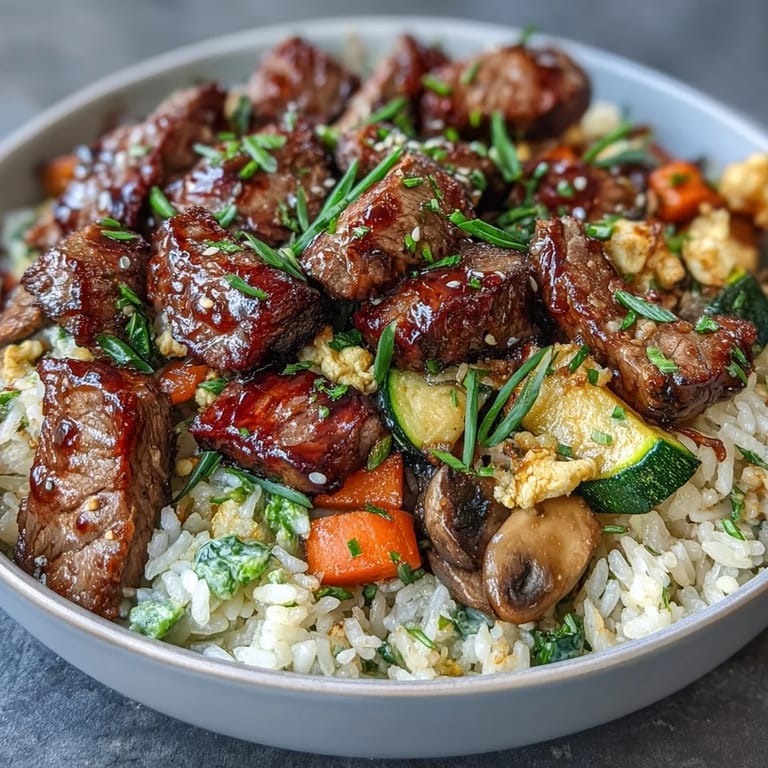
- The soy is already salty so go easy, but a crack of fresh black pepper and a pinch more salt might be needed depending on your ingredients. Plate it up immediately and scatter sesame seeds and remaining green onions on top for both flavor and those little visual touches that make it feel special.
 Pin It
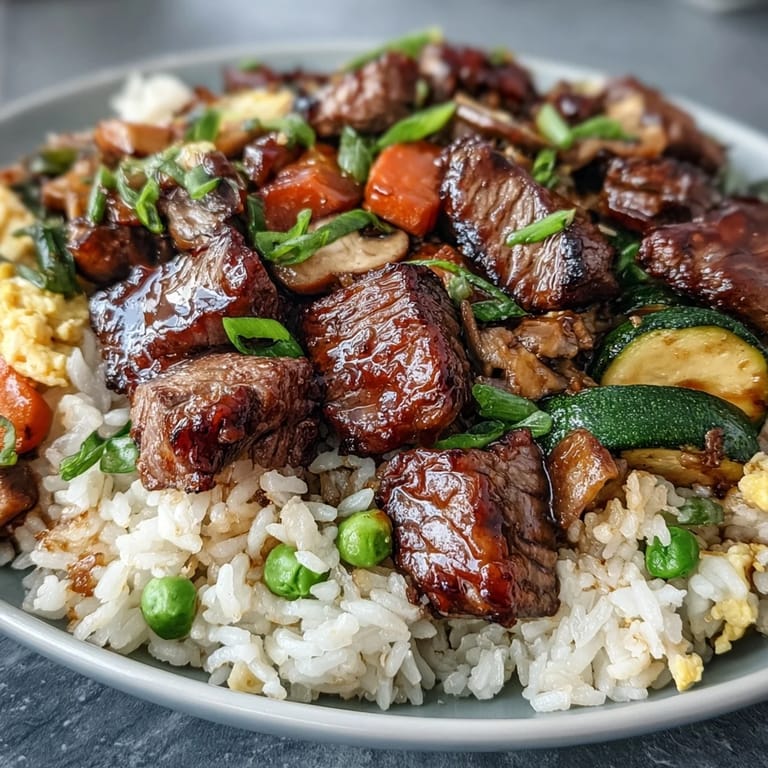
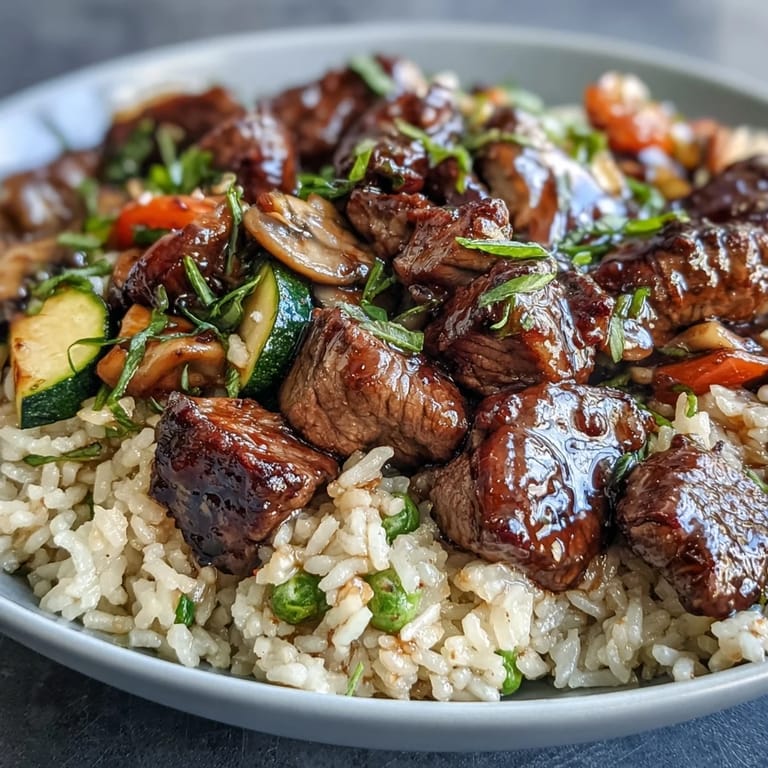
 There's something almost magical about serving food that came from a single pan, watching someone's face light up because it tastes like the hibachi place they love but you made it in your home kitchen. The steam rising off the plate, the sesame seeds catching the light, the way the steak is still tender inside those crispy edges—this is when cooking stops being a chore and becomes a small gift you give yourself and the people you feed.
Why Cold Rice Changes Everything
I learned this lesson the hard way after making a batch with fresh rice straight from the rice cooker, watching it turn into a porridge situation halfway through cooking. The starch in warm rice releases moisture into the pan, which steams the rice instead of letting it get crispy and textured the way you want it. Refrigerating rice overnight also develops subtle flavor changes as the starches crystallize differently, which sounds scientific but really just means it tastes better.
The Art of the One-Pan Meal
There's a rhythm to cooking like this that takes the pressure off because you're not juggling multiple burners or timing different dishes. You're moving from protein to vegetables to eggs to rice in one continuous flow, which means you stay focused and present in the cooking rather than stressed about coordination. Once you understand the basic sequence, you can adjust temperatures and timing based on how your ingredients look and smell rather than following a timer religiously.
Make It Your Own
The beauty of hibachi-style cooking is how it adapts to what's in your fridge or what you're craving on a given night. Swap the steak for shrimp if you want something lighter, or add cashews if you like a textural contrast that nobody's expecting. Here are a few quick pivots that work beautifully with this framework:
- Drizzle with spicy mayo or a squirt of sriracha after serving to add heat and richness that transforms the dish into something completely different from the original.
- Add a handful of fresh broccoli or snap peas in the last minute of cooking to keep things crisp and add a vegetable that tastes almost like it's still raw in the best possible way.
- Stir in a tablespoon of miso paste with your soy sauce instead of just soy, which adds a deeper umami note that makes people ask what your secret ingredient is.
 Pin It
 This is the kind of dish that sneaks into your regular rotation because it's quick enough for weeknights but impressive enough for casual guests who think you're more skilled in the kitchen than you actually are. Once you nail the technique, you'll find yourself making it whenever you want that hibachi restaurant magic without leaving your kitchen.
Recipe FAQs
- → What type of rice works best for hibachi fried rice?
Day-old jasmine rice works exceptionally well because it's drier and less sticky, preventing mushy texture. The grains separate easily for that perfect fried rice consistency.
- → Can I use a different cut of beef for the steak?
Yes! While sirloin is recommended for its balance of tenderness and flavor, you can use ribeye, flank steak, or even skirt steak. Just cut against the grain into bite-sized cubes.
- → What vegetables can I substitute in this hibachi-style dish?
Feel free to swap in broccoli florets, bell peppers, snap peas, or bean sprouts. The key is using vegetables that cook quickly and maintain some crunch in the high-heat pan.
- → How do I prevent the rice from becoming soggy?
Always use cold, previously cooked rice that's been refrigerated overnight. This dries out the grains slightly, allowing them to fry up crispy rather than steaming into a mushy consistency.
- → Can I make this dish ahead of time?
The components can be prepped in advance—marinate the steak and chop vegetables. However, this dish tastes best when cooked fresh and served immediately while the rice is slightly crispy and steak is tender.